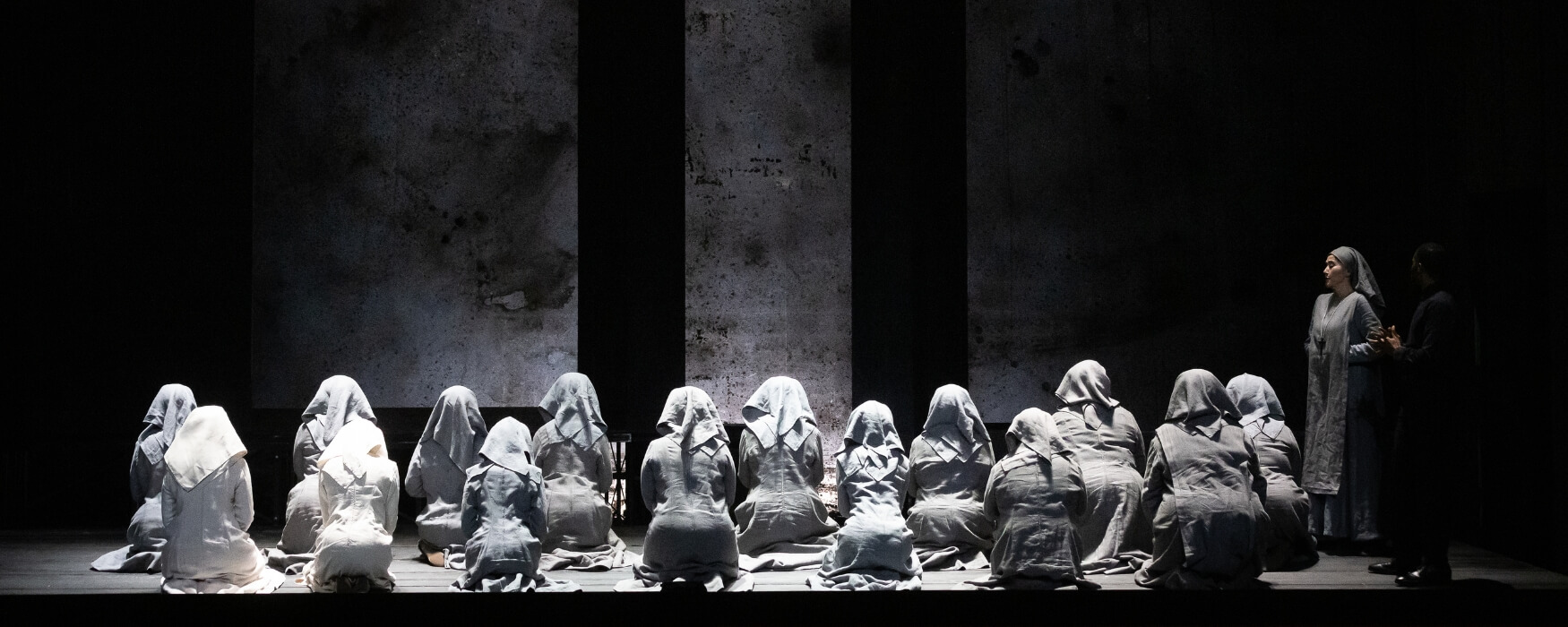
THE DALLAS OPERA PREMIERE
Shattering … “austerely beautiful … and utterly wrenching.”
—THE NEW YORK TIMES
Time travel to 1794 Paris, where France’s Reign of Terror is raging. A frightened young aristocrat enters a convent, desperate to find peace from religious persecution. But as the Mother Superior warns, she has entered a house of prayer, not an escape from reality. Based on a real-life incident, 16 Carmelite nuns—each with her own private demons—must decide if they will live in fear or die together in faith as martyrs on the guillotine.
Joyce El-Khoury captures all hearts with “radiant authority” (THE INDEPENDENT) as Sister Blanche; “Uncommonly enchanting” mezzo Stéphanie D’Oustrac (JERUSALEM POST) is Mother Marie; Leah Hawkins, the Metropolitan Opera’s 2024 Beverly Sills Artist, is the new Prioress; and the remarkable Patricia Racette gives “a masterclass in characterization” (HOUSTON PRESS) as the old Prioress.
Co-production of Théâtre des Champs-Elysées and Théâtre Royal de la Monnaie, Bruxelles.
Show Details
Language
Sung in French with projected English titles
Running Time
Approximately 3 hours, including one intermission.
Cast

Joyce El-Khoury
Blanche de la Force
Patricia Racette
Mme. De Croissy
Leah Hawkins
Mme. Lidoine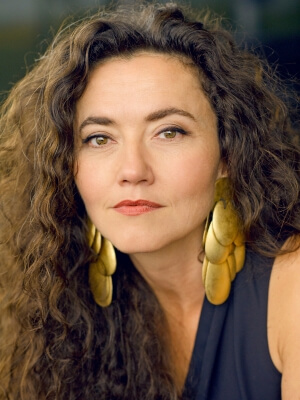
Stéphanie d'Oustrac
Mother Marie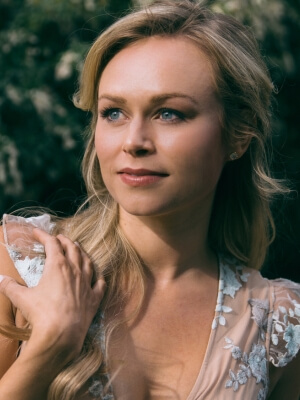
Deanna Breiwick
Sister Constance
Gretchen Krupp
Mother Jeanne
Meridian Prall
Sister Mathilde
Raymond Aceto
The Marquis de la Force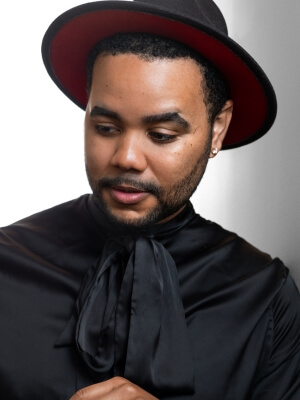
Martin Luther Clark
The Chevalier de la Force
Aaron-Casey Gould
Chaplain
Andrew Potter
Thierry/The Jailer
Brian Post
Javelinot/
Samuel "PJ" Lopez
First Commissioner
Armon Golliday
Second Commissioner/First Officer
Kristen Mata
Mother Gerald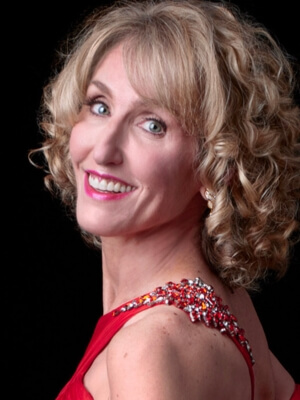
Stephanie Jennings
Sister Claire
Carelle Flores
Sister Antoine (Portress)
Tiffanny Lynne Lopez
Sister Catherine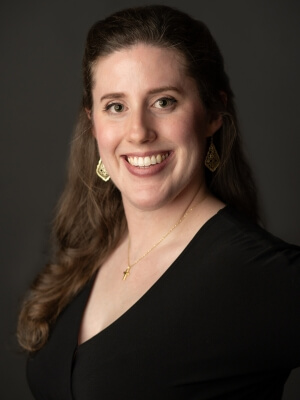
Catherine Swindle
Sister Felicity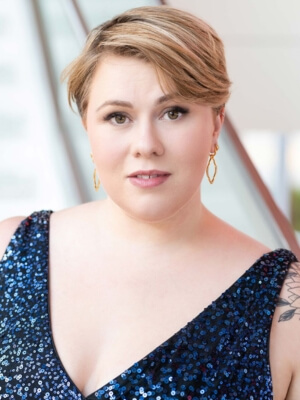
Rachel Davies
Sister Gertrude
Silvia Paola Núñez
Sister Alice
Rachel Moon
Sister Valentine
Arielle Collier
Sister Anne of the Cross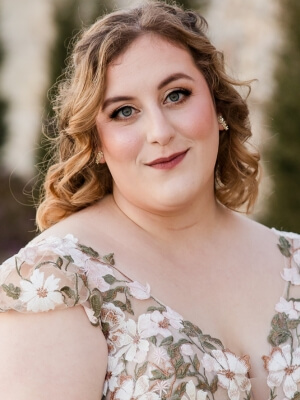
Sabatina Mauro
Sister Martha
Susannah Woodruff
Sister St. CharlesCreative Team

Emmanuel Villaume
Conductor
Olivier Py
Original Director
Daniel Izzo
Revival Director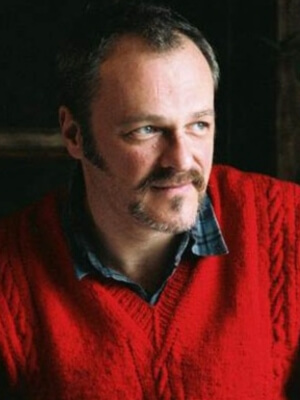
Pierre-André Weitz
Set & Costume Designer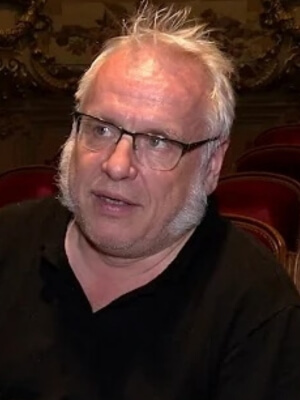
Bertrand Killy
Lighting Designer
David Zimmerman
Wig & Make-Up Designer
Paolo Bressan
Chorus DirectorDialogues of the Carmelites Synopsis
Act I
The first signs of the French Revolution are beginning to shake the country. In his library, the Marquis de la Force and his son, the Chevalier, are worried about Blanche, the Chevalier’s fearful, nervous sister, whose carriage has been held up by a mob on her way home. When Blanche arrives, she makes light of the incident, but her anxiety is revealed when a servant’s shadow frightens her as she leaves the room. Shaken, she returns to tell her father that she has made up her mind to become a nun.
Weeks later at the Carmelite convent in Compiègne, the aged and ailing prioress Madame de Croissy interviews Blanche and makes it clear to the girl that the convent is a house of prayer, not a refuge. Nevertheless, the prioress is touched by Blanche’s resolve to embrace her new life.
In the workroom of the convent, Blanche and the young Sister Constance discuss their fear of death, which Constance claims to have overcome. Blanche admits her envy of her companion’s straightforward and easygoing nature. Constance shocks Blanche by telling her that she knows that they will both die young and on the same day.
In the infirmary, Madame de Croissy is lying on her deathbed, struggling to appear calm. She blesses Blanche and consigns her, as the youngest member of the order, to the care of the loyal Mother Marie. The prioress confesses her terror in the hour of death, then falls lifeless.
Act II
That night in the chapel, Constance and Blanche keep vigil by the prioress’s bier. Blanche is overcome by fear and is about to run off when Mother Marie appears. Realizing that Blanche is genuinely afraid, she tries to calm her. Constance hopes that Mother Marie will be the new prioress. She tells Blanche that she wonders why a Godfearing person like Madame de Croissy had to die such an agonizing death. Perhaps, she says, people don’t die for themselves but for others. Someone else will be surprised one day to find death easy.
Madame Lidoine has been appointed the new prioress. In the chapter room, she addresses the convent, counseling patience and humility.
A visitor is announced—it is Blanche’s brother, who is about to flee the country. He urges Blanche to leave the convent and return to their father. Blanche replies that her duty is to her sisters.
In the sacristy, the chaplain, forbidden to perform his duties, celebrates his last mass. The nuns discuss the fear that has grabbed the country, and Mother Marie wonders if self-sacrifice will be their destiny. Madame Lidoine reminds them that martyrs are not chosen by their own will, only by God’s. Two commissioners enter and tell the sisters that they have been expelled from the convent. One of them, speaking quietly to Mother Marie, adds that he will do what he can to help them get away safely. One of the sisters gives Blanche a figurine of the Christ Child. When revolutionary cries are heard from outside, Blanche nervously drops the figure, breaking it. She is horrified by this omen.
Act III
In the devastated chapel, Mother Marie suggests, in Madame Lidoine’s absence, that they all take a vow of martyrdom by unanimous decision. Noting Blanche’s reaction, the others suspect that she will vote against it. When the secret ballot reveals one dissenter, Constance claims it was she and asks to reverse her vote so that the vow can proceed. Blanche, afraid to live or to die, runs away. Soldiers lead the sisters from the convent.
Blanche is forced to work as a servant in the ransacked mansion of her father, who has been sent to the guillotine. Mother Marie finds her there and tries to persuade her to return to the sisters.
The nuns have been arrested. At the Conciergerie prison, Madame Lidoine joins the sisters in their vow of martyrdom. Constance says that she has dreamed of Blanche’s return. A jailer enters and reads the death sentence. Madame Lidoine blesses the sisters. When Mother Marie learns from the chaplain that the nuns will die, she resolves to join them, but the chaplain reminds her that it is for God to decide whether or not she will be a martyr.
A crowd has gathered on the Place de la Révolution. The Carmelites walk toward the guillotine, led by Madame Lidoine, singing the “Salve Regina.” With each stroke of the blade, their voices are silenced, one by one, finally leaving only Constance. On her way to the scaffold, she sees Blanche step up from the crowd, take up the chant, and follow her to her death.
Courtesy of the Metropolitan Opera
Pre- and Post-Opera Discussions
Join us for these engaging and informative pre- and post-opera discussions:
Joy and Ronald Mankoff Pre-Opera Talk: Hosted by The Mrs. Eugene McDermott Music Director Emmanuel Villaume, this interactive 30-minute lecture begins one hour before the start of each opera in the Margaret McDermott Performance Hall. Admission is free with your ticket to a Dallas Opera performance.
Sunday Post-Opera Talkback: Immediately following the Sunday matinee performance from the stage, this brief and casual Q&A session with members of the cast gives you an opportunity to ask questions about the performance. Hosted by Ian Derrer, The Kern Wildenthal General Director and CEO at The Dallas Opera.
Sponsors
The VanSickle Family Foundation in memory of Edith and Elmer VanSickle
Season Sponsor
Martha Peak Rochelle
Presenting Sponsor
Betty and Steve Suellentrop
Presenting Sponsor
Joanne L. Bober
Supporting Sponsor